
Franchising is often sold as a “shortcut to business success.” Ready-made brand, proven systems, built-in support — sounds perfect, right?
But behind the glossy brochures and sales pitches, franchising comes with serious trade-offs. If you’re an entrepreneur in India, especially in fast-growing cities like Chennai, understanding the real franchise advantages and disadvantages can save you lakhs — and years of regret.
Let’s break it down honestly.
Table of Contents
What Is Franchising?
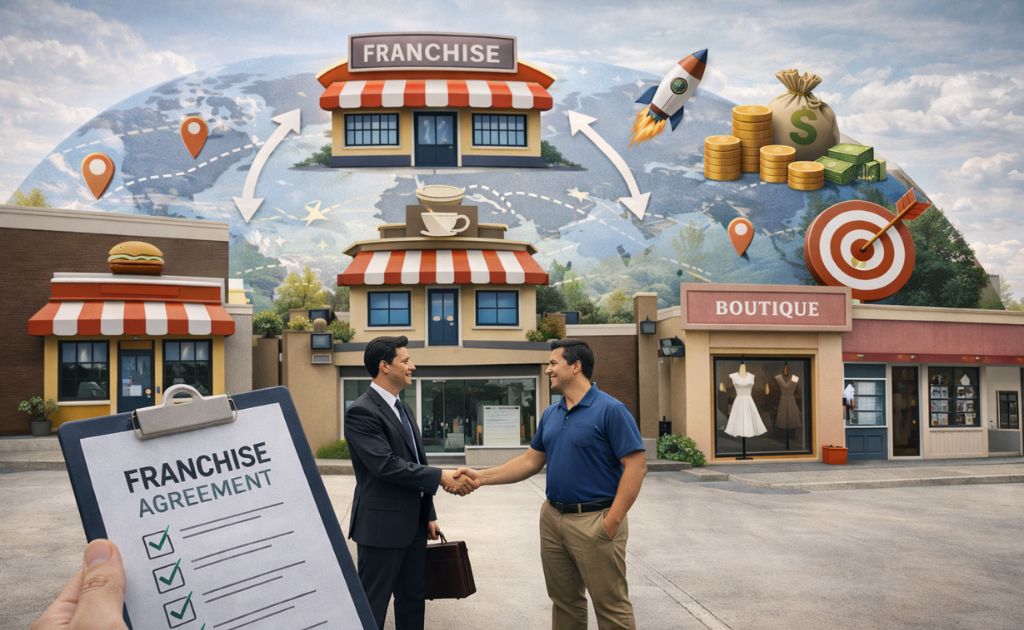
Franchising is a business model where a franchisor (brand owner) allows a franchisee (local operator) to run a business using their:
- Brand name
- Business model
- Products or services
- Operating systems
In return, the franchisee pays initial franchise fees and ongoing royalties.
Well-known examples include Domino’s and Anytime Fitness, which grow by partnering with local operators instead of owning every outlet.
It’s popular because it appears to reduce risk. But that’s only half the story.
Franchise Advantages for Franchisees
Buying a franchise can be a smart move — especially for first-time business owners who want structure.
✅ Established Brand Recognition
Customers already know the brand. You don’t start from zero trust. Footfall can be faster compared to a completely new local brand.
✅ Proven Business Model
You’re not experimenting with pricing, menu design, or operations. SOPs (Standard Operating Procedures) are already tested.
✅ Training & Operational Support
Most franchisors provide:
- Staff training
- Setup guidance
- Vendor networks
- Technology systems
This reduces beginner mistakes.
✅ Easier Market Entry
Banks and investors often feel more comfortable funding a known franchise than a brand-new concept.
✅ Potentially Faster Break-Even
Because systems are optimized, many franchise outlets recover investments faster than independent startups — if the location and execution are strong.
Key Disadvantages for Franchisees (The Part Sales Teams Don’t Emphasize)
Here’s where reality hits.
| Aspect | What You’re Told | What Actually Happens |
| Control | “Follow our successful system” | You must follow strict rules — pricing, suppliers, interiors, uniforms, offers |
| Costs | “One-time investment” | Ongoing royalties (5–12%), marketing fees, software fees, upgrade costs |
| Marketing | “We handle branding” | You still pay for local ads but must follow their creative rules |
| Flexibility | “Easy to grow” | Contract terms can change; new mandates may increase your costs |
| Ownership | “You run your own business” | You build their brand, not yours |
Many franchisees eventually realize:
They are business operators — but not true brand owners.
Franchise Advantages and Disadvantages for the Franchisor
Franchising isn’t risk-free for the brand owner either.
👍 Franchisor Advantages
Rapid Expansion Without Huge Capital
Instead of investing in every outlet, the franchisor uses franchisees’ money to grow faster.
Multiple Revenue Streams
Income comes from:
- Franchise fees
- Royalties
- Supplier margins
- Renewal fees
Motivated Local Operators
Franchisees usually work harder than hired managers because it’s their money on the line.
Market Insights
Franchisees provide local feedback that helps improve products and services.
👎 Franchisor Disadvantages
Quality Control Problems
One poorly run outlet can damage the entire brand reputation.
Legal Disputes
Conflicts over territory, fees, or performance often lead to lawsuits.
Lower Profit Per Outlet
Royalties are only a fraction of what full ownership could generate.
High Support Burden
Training, audits, and ongoing support demand time and resources.
Quick Snapshot
| Stakeholder | Biggest Advantage | Biggest Risk |
| Franchisor | Fast, low-capital expansion | Brand damage from bad franchisees |
| Franchisee | Faster business start | High fees + limited freedom |
Franchise vs Starting Your Own Business
This is the big decision.
| Factor | Franchise | Independent Business |
| Startup Time | 3–6 months | 6–18 months |
| Initial Cost | ₹20–50 Lakhs (with fees) | ₹10–30 Lakhs (flexible) |
| Control | Low | Full |
| Profit Sharing | Royalties to brand | 100% yours |
| Creativity | Limited | Unlimited |
| Risk | Lower early risk | Higher early learning curve |
| Long-Term Wealth | Limited by brand rules | Strong brand equity possible |
A franchise may help you start faster, but an independent business helps you build an asset you truly own.
Real-World Insights from Indian Entrepreneurs
Across India, many franchisees enter with excitement and later feel restricted.
Common complaints include:
- “Marketing support” that only means posters and templates
- Mandatory upgrades every few years
- Rising royalty percentages
- Limited say in local offers and pricing
Some outlets perform brilliantly. Others struggle because fees remain fixed even when sales drop.
Industry estimates suggest a significant portion of franchise outlets shut down within 5 years — often due to high overheads and limited flexibility.
When Franchising Makes Sense
Franchising can be a good fit if you:
✔ Have capital but little business experience
✔ Prefer structured systems over experimentation
✔ Want lower early-stage uncertainty
✔ Are entering a market where brand trust matters heavily
When Building Your Own Brand Is Smarter
You may be better off starting independently if you:
✔ Are strong in marketing and branding
✔ Want full control over pricing and offers
✔ Aim to build a long-term asset
✔ Value creativity and flexibility
✔ Don’t want to pay lifelong royalties
In service sectors like spas, fitness, logistics, or education, a well-marketed independent brand can outperform a franchise — because you keep the profits and the brand equity.
The Creator vs The Copier Mindset
Franchising is about replicating.
Entrepreneurship at its highest level is about creating.
Franchises give you systems — but rarely strong local marketing power.
When you build your own brand, you control:
- Positioning
- Customer experience
- Offers and pricing
- Long-term brand value
And most importantly — you own the outcome.
Final Verdict: Is a Franchise Worth It?
There’s no universal answer.
A franchise can be a safer starting point.
An independent business can be a more powerful long-term play.
The real question is:
👉 Do you want a guided path with limits
or
👉 A challenging path with full ownership and upside?
Choose based on your skills, risk appetite, and long-term vision — not just the sales pitch.
🎯 Franchise or Your Own Brand?
Real success doesn’t come from a logo you rent — it comes from smart strategy and marketing that brings customers.
Before you invest lakhs into a franchise or struggle alone, get expert clarity.
Amjad Moulana helps entrepreneurs build strong, independent brands that grow without paying lifelong royalties.
🚀 Build a brand you truly own.
👉amjadmoulana.com
